The History
Any story of the past is part myth and part reality- Purchase is no different. Here is the history that inspired the story.
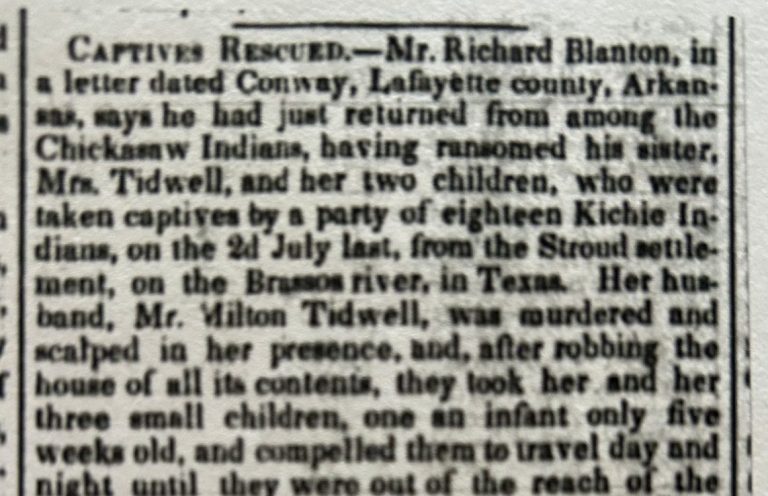
Kidnapping of Sarah Tidwell
In Texas, 1840, a pioneer family- Milton and Sarah Tidwell and their three children established a homestead along the Brazos River. A group of 40 Cherokee and Kickapoo visited their home one night, murdered Milton, robbed the house, and took Sarah and the children captive. She was held captive for weeks- her youngest son dying in her arms to disease. Eventually, near Coffee's Trading Post, on the border between Texas and Indian Territory, Sarah was recognized by a former neighbor in Arkansas. This man alerted Sarah's brother, Richard Blanton of her whereabouts. Blanton made the trip from Spring Bank, AR to pay the ransom for the return of Sarah Tidwell and her two surviving sons.
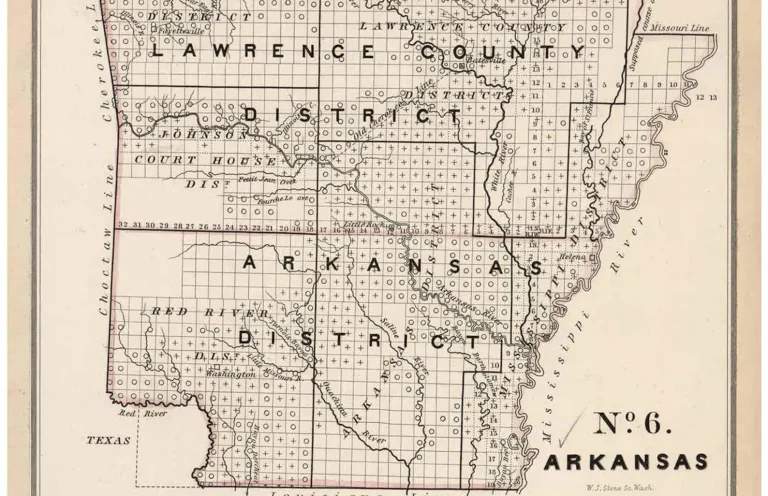
Arkansas, 1843
Arkansas joined the union in 1836 and became a destination for new settlement. By 1843, the population had exceeded 100,000. It was rural with few cities claiming more than a couple hundred residents. Southern Democrats had a strong hold on politics. Industry was driven by cotton plantations in the lowlands and small farming in the Ozarks.
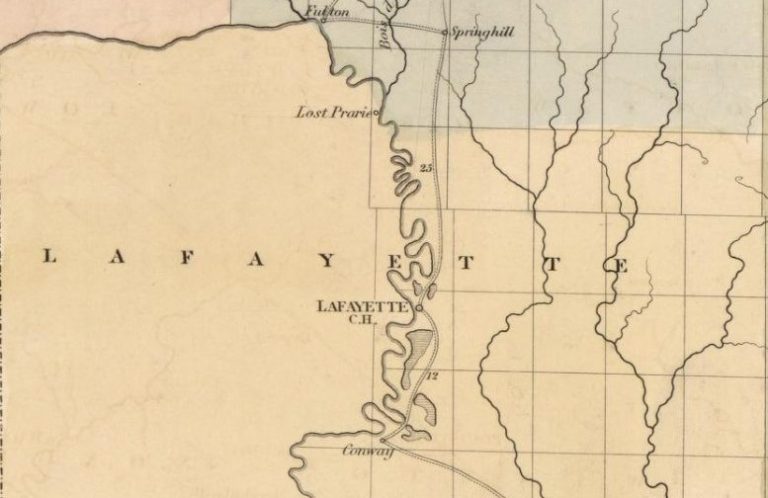
Lafayette County, AR
Lafayette County, in 1843, also encompassed what is now Miller County to its west, doubling its current size. Its population was barely more than 2,000 and nearly all of them were farmers. Lost Prairie and Long Prairie were notable plantation settlements of the time. The first governor of Arkansas, James Conway, settled there after his first term ended in 1840.
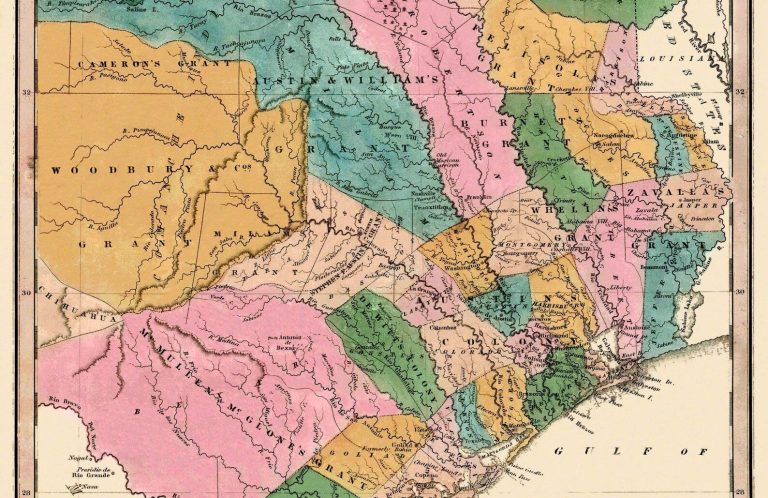
Texas, 1843
In 1843, Texas was an independent Republic. Settlers from the Southern U.S. and Europe, namely Germany, were flocking to settle there, drastically changing its demographics. It was territory of tribes like the Caddo and Comanche. It was Old Mexico. It then found itself in the expansion of slavery, becoming a U.S. state in 1845.
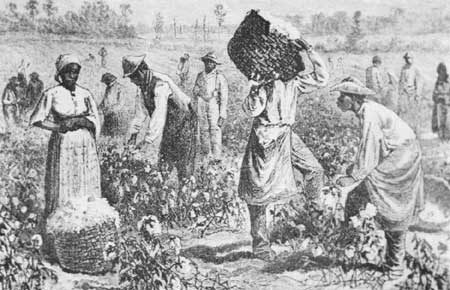
Slave Life in Arkansas
Slaves of African American descent provided the labor for the cotton-based economy in Arkansas during the Antebellum years. Their days often involved working in the field from when the sun rose until the sun set. They resided in cramped cabins with few possessions beyond the shirt on their back. A slave was property to be bought and sold. While a slave's experience differed according to their master, the institution denied them the freedom and dignity that is due all people.
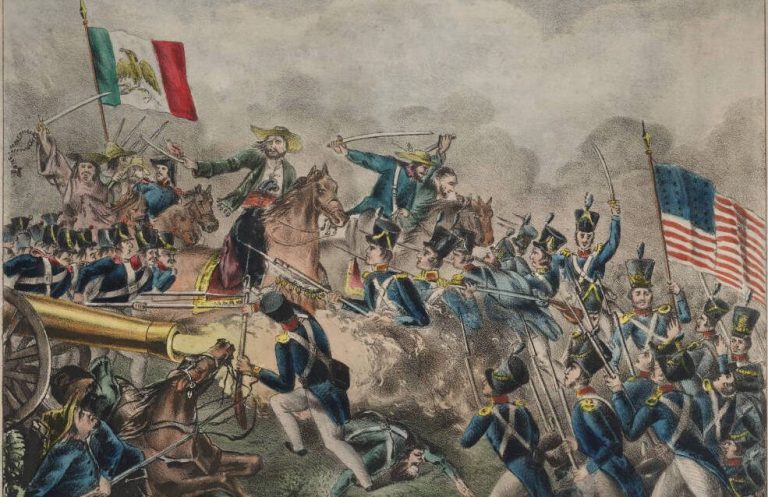
Mexican-American War
The Mexican-American War began directly following Texas statehood. President Polk sent troops to Texas on the pretense of a border dispute. His policies had been to expand the U.S. territory as far as the Pacific and Mexico stood in the way. It was a two year conflict resulting in the Treaty of Guadalupe-Hidalgo which granted the U.S. Mexico's northernmost territories.
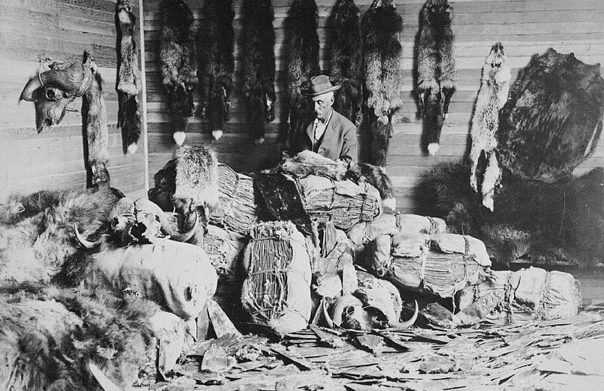
Sulphur Fork Factory
The factory system was first instituted by George Washington as a means of trade with Native Americans. Private trade for profit was prohibited and government licensed trading posts were established for trade of goods such as furs. Sanctioned trade with tribes ocurred at forts or factories were established including one at the confluence of the Sulphur and Red Rivers. The trading post was abandoned along with the factory system in 1822.
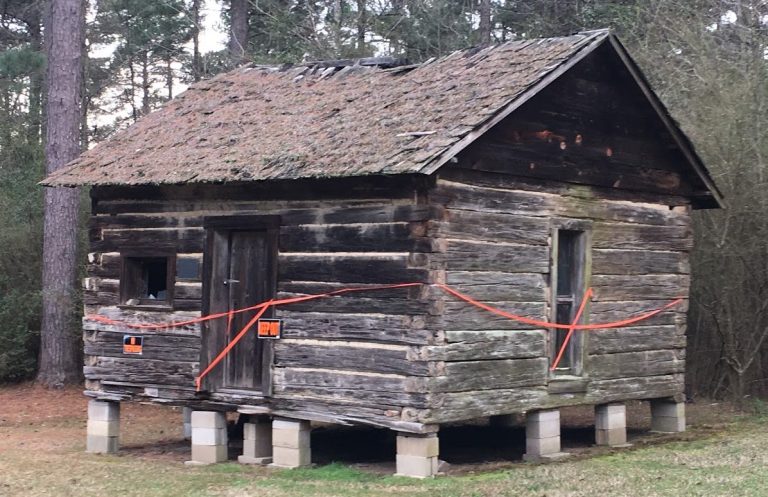
Lafayette Courthouse
By 1843, the courthouse had moved from its original site on the Red River further east to Lewisville. It was the seat of government for the county and the county judge had more executive duties than a judge might today. The photo above is of the original Lafayette County jailhouse built in 1830.
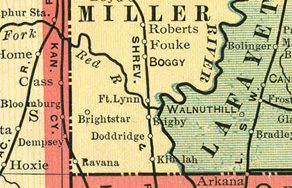
Bright Star, AR
Bright Star still exists as an unincorporated community in Miller County. For a time in the mid 1800s, it embodied the stereotypically image of a wild west town. Located roughly 10 miles west of the confluence of the Red and Sulphur Rivers, it was the focal point of economic and social activity of southwestern Lafayette County for the decades of the 1850s and 1860s. It was home to several mercantiles, churches, and even a bowling alley for a time. It declined when the construction of railroads in the late 1800s bypassed it, steering traffic and opportunity to towns nearby.
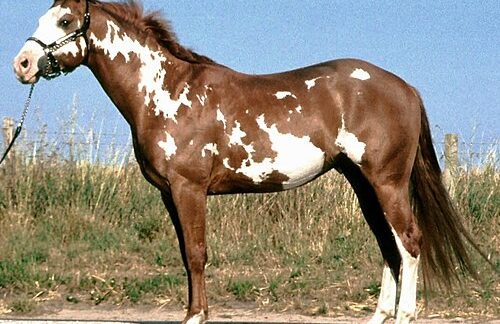
The Paint
The Paint breed of horse originates from the Spanish who introduced horses to North America during their explorations. Many Native Americans preferred the horses with colored markings, believeing they had powers of protection. So the Paint as a breed began on the Plains. Tribes such as the Comanche were master horsemen and an Indian horse was a prized possession. Some Paints possessed a marking on their forehead called a Medicine Hat. This signified a horse with superior powers of protection.
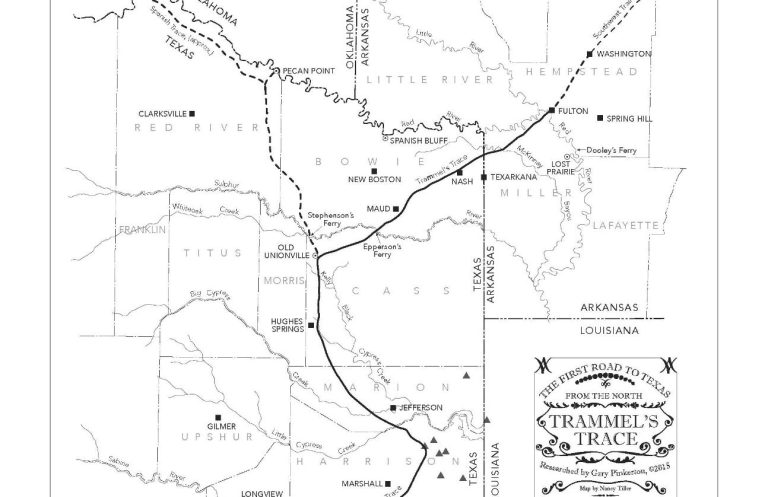
Nicholas Trammel
Nicholas Trammel was an early pioneer of Texas and then Arkansas. He originated from Tennessee and undertook various entrepreneurial activities including horse trading, operating a ferry, and eventually keeping a tavern. He had many encounters with the law and much of his business dealigs were likely nefarious. He is best known as the man that cut the trail through East Texas known as Trammel's Trace.
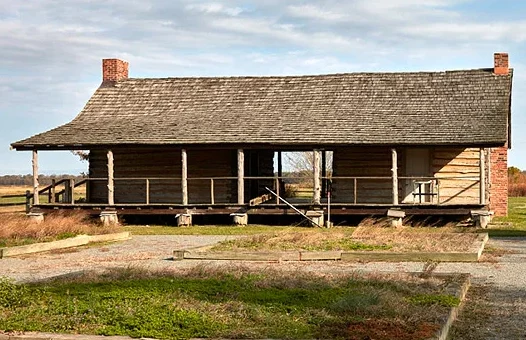
Dog Trot House
Dog trot houses were built throughout the South to survive the summer heat. The breezeway that cut the house in half invited airflow to the two rooms that flanked it. One side of the house was used for cooking and eating while the other side served as the living quarters and bedroom.
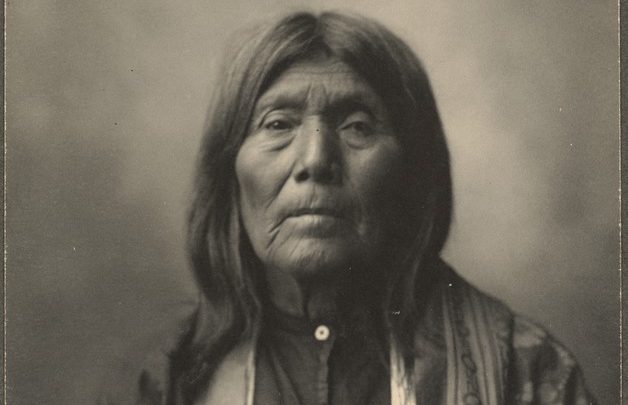
Kichai People
The Kichai people resided on the Trinity River in Texas when white settlers arrived in the 19th Century. There numbers were few and there are fewer still today. They were allies of the Caddo People and the French when they occupied the territory. A traditional Kichai village consisted of houses made of grass and mud plaster. However, in the mid 1800s, they were forced to integrate with tribes such as the Wichita which disruted their traditional lifestyle.
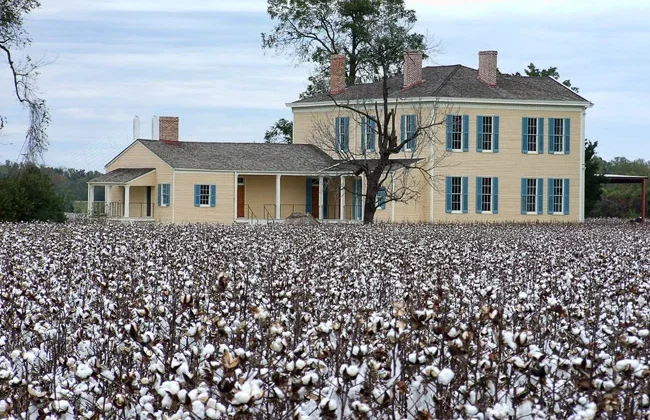
Arkansas Planters
In the Old South, the designation of "Planter" meant you belonged to the elite upper class. Any White male that owned more than 20 slaves earned the status. It was the Planters that owned the large cotton plantations for which the Antebellum South is notorious. The Delta regions of Arkansas is where most of the plantation economy was located; however, the Red River was a growing cotton region in the 1840s.
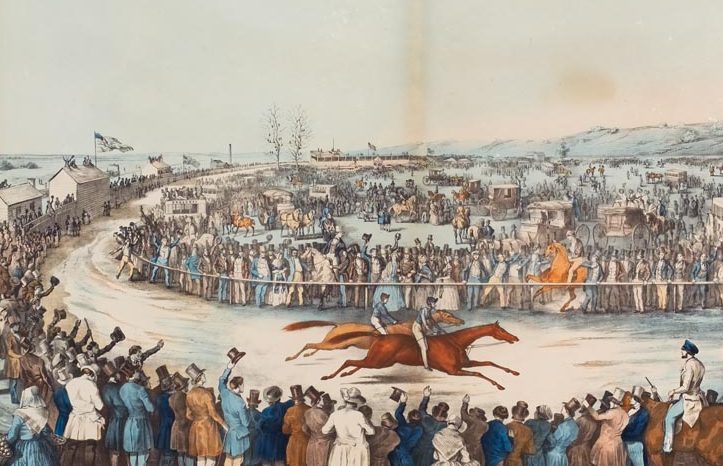
Early 1800s Horse Racing
Horse Racing was America's first major spectator sport. It has always carried an association with gambling, therefore, horse racing met many legal challenges in the 1800s. In Arkansas, there were specific state-wide bans on lotteries but not horse racing, however local laws were enforced. Races may have involved straight sprints down country roads or city streets or some counties in Arkansas possessed quarter mile tracks. While any breed of horse could be raced, thoroughbreds and quarter horses were the most sought after breeds for racing.
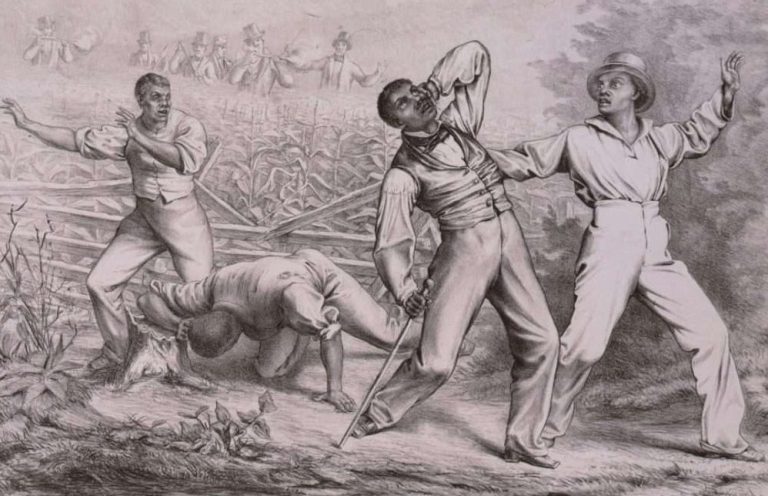
Slave Laws in Arkansas
Individual Slave Codes defined the treatment of slaves throughout the South. Arkansas's codes were much like the rest- a master's permission was needed for every activity a slave performed. The laws were created to protect the interests of the White population and almost never the slaves. Offenses were often punished by whippings- the infamous 40 lashes as outlined in the Old Testament. Many states prohibited teaching a slave to read. While Arkansas had no such law, the act of educating a slave was extremely rare.
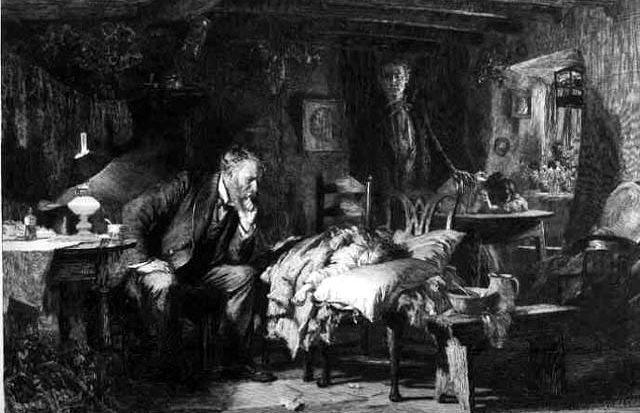
Frontier Doctors
in the early 1800s, the medical profession was still young. Doctor on the frontier may had received very little training and folk remedies were still often employed. There were medical schools, however, but very few in the South. A country doctor had to travel much to meet the needs of his patients, visiting them in their homes. In the cities, physicians often had offices in their homes to receive patients. The notion of germs as the root of illness was a developing idea. Doctors instead had theorized the balancing of body fluids to treat illness.